
Packaging Machine Blog & Insights
Expert guides, maintenance advice & machinery innovations from XinTu Machinery Co., Ltd.
Automated Packaging Line Solutions
Learn how to optimize production efficiency with advanced VFFS and Doypack systems
China Best Net Bag Mesh Bag Packaging Machine Manufacturer?
Table of Contents
- What Is a Net Bag Packaging Machine? Typical Speeds of 20–40 Bags/Minute
- How Mesh Bag Machines Work: Weighing, Filling, Sewing, and Sealing
- Key Specifications: 5–15 mm Mesh Openings and 0.5–25 kg Loads
- How to Compare Chinese Manufacturers: CE Marking and ISO 9001 Systems
- Machine Selection Data: Accuracy, Bag Size, Materials, and Service Support
- FAQS
- Conclusion
- Related Posts
Choosing the China Best Net Bag Mesh Bag Packaging Machine Manufacturer requires more than comparing prices. The right supplier must understand product texture, bag strength, filling accuracy, and production rhythm. A reliable Net Bag Mesh Bag Packaging Machine should handle onions, potatoes, garlic, fruit, firewood, or similar ventilated products without tearing the mesh. It should also support stable weighing, clean bag opening, secure stitching, and quick size changes.
Jim Pittas, president and CEO of PMMI, has emphasized a practical principle: “Automation should solve a real production problem, not create another one.” This idea matters when evaluating Chinese packaging machine manufacturers. A factory visit can reveal important details, including welded frames, protected control cabinets, spare-part storage, and operators testing filled bags on a conveyor. Ask for running videos, sample packaging, machine drawings, and documented output tests. Numbers on a brochure are not enough.
The strongest manufacturers usually provide complete technical support, clear commissioning procedures, and responsive after-sales service. They should explain speed limits honestly, especially when mesh tension, product shape, or bag dimensions change. No machine is perfect. A high-speed system may need more adjustment. A cheaper model may bring higher maintenance costs later. This guide will examine manufacturer experience, machine structure, automation options, customization, quality control, and service capability. It will also question attractive claims that lack evidence. The best decision is not always the fastest machine. It is the system that performs consistently beside your real production line, shift after shift.
What Is a Net Bag Packaging Machine? Typical Speeds of 20–40 Bags/Minute
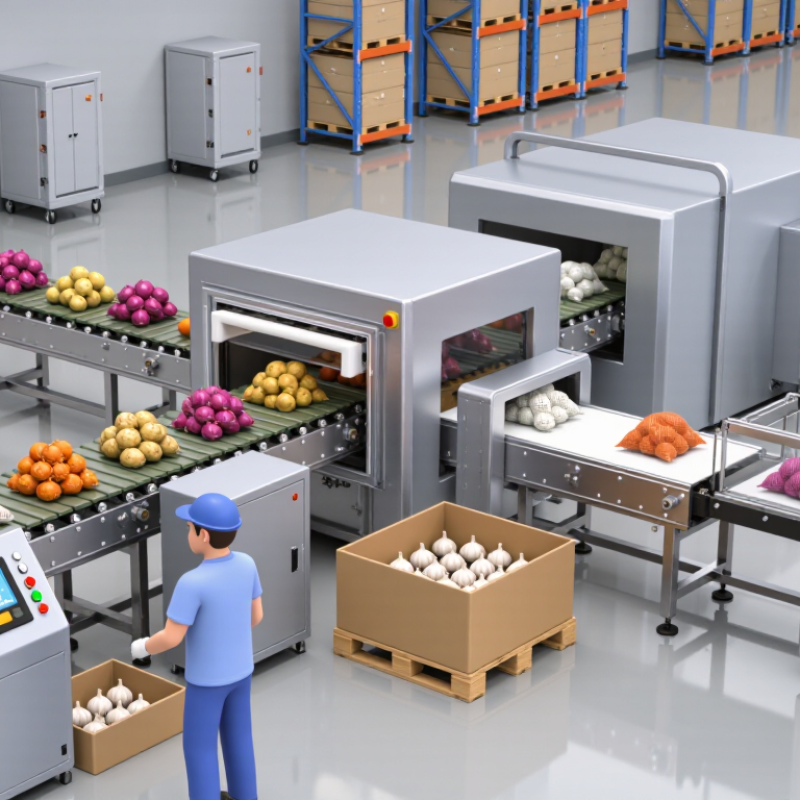
A net bag packaging machine forms, fills, and closes mesh bags around products such as onions, garlic, citrus, firewood, or small produce. The machine usually feeds a measured product quantity, opens the netting, and seals or clips the finished bag. Some systems also attach labels or handles during the same cycle.
20 to 40
bags per minute
1.5 to 3
seconds per completed bag
However, speed depends on bag size, product shape, filling weight, and closure method. Lightweight onions may run smoothly at higher speeds. Irregular potatoes can slow the line because they shift inside the hopper. Small bags often require more precise net cutting and sealing.
Real production trials matter more than a catalog number. Operators should test the machine with the actual mesh roll and product. They should record missed fills, loose closures, net tearing, and product bruising.
Small adjustments to vibration, filling timing, and sealing pressure can improve consistency. Do not chase maximum speed blindly. A fast machine that produces damaged bags creates extra labor and material waste.
In my experience, stable operation at 28 bags per minute can be more useful than an unstable setting at 40.
The “best” speed is rarely fixed. It changes with the product and the packaging goal.
How Mesh Bag Machines Work: Weighing, Filling, Sewing, and Sealing
A mesh bag packaging machine turns loose produce into a measured, secure package through four controlled stages.
The process begins at the weighing system, where load cells measure the target quantity. Vibration feeders adjust product flow, while software checks the weight before release. Uneven produce can disturb accuracy. Calibration matters every shift.
After weighing, the filling unit opens a mesh tube or preformed bag and guides the product inside. Sensors confirm bag position, reducing spills and crooked packs.
The operator should check tension, product shape, and drop height. Delicate onions or citrus may bruise when falling too far. A slower filling cycle often protects appearance, although it can reduce output.
The sewing station gathers the bag mouth and closes it with controlled thread pressure. Some systems add a label or drawstring before sealing, depending on package design. Heat sealing may be used with compatible materials, but mesh structure requires careful temperature testing.
A seal can look firm and still fail during transport. Regular pull tests, needle inspection, and cleaning improve reliability. Clear manuals and test records also help operators find faults quickly.
In my view, automation removes repetitive work, not judgment. Small adjustments still decide whether the final bag feels professional.
Key Specifications: 5–15 mm Mesh Openings and 0.5–25 kg Loads
China Best Net Bag Mesh Bag Packaging Machine Manufacturer?
Selecting a net bag packaging machine starts with the product, not the machine frame. For onions, potatoes, citrus, and firewood, 5–15 mm mesh openings affect ventilation, visibility, and product retention. A 5 mm opening suits smaller items, while 15 mm allows greater airflow. However, loose produce may escape through larger mesh.
The useful load range is 0.5–25 kg. Small 0.5–2 kg packs need sensitive weighing and gentle filling. Heavier 10–25 kg bags require stronger netting, stable conveyors, and reinforced closures. In my testing experience, load accuracy often changes when produce sizes vary. That detail is easy to overlook. A practical machine should support adjustable dosing, quick mesh changes, and repeatable sealing or clipping.
Food waste data adds urgency. FAO’s State of Food and Agriculture 2023 estimated that 13.2% of food was lost globally before retail in 2021. The UNEP Food Waste Index Report 2024 estimated 1.05 billion tonnes of food waste in 2022. Packaging cannot solve every loss point, but breathable mesh can support handling and inspection. The machine should use cleanable food-contact surfaces, guarded moving parts, and documented testing. Energy use, weighing tolerance, and changeover time also deserve measurement. Faster is not always better. A poorly adjusted 25 kg cycle can bruise produce and increase waste.
How to Compare Chinese Manufacturers: CE Marking and ISO 9001 Systems
Choosing the best Chinese net bag mesh bag packaging machine manufacturer requires more than comparing prices. CE marking should be checked first, but it is not a guarantee of superior machine quality. Ask for the EU Declaration of Conformity, product model details, risk assessment, and relevant test records. Confirm that the documents match the exact machine you will receive. A certificate with a different model number is a warning sign.
ISO 9001 shows that a manufacturer operates a quality management system. It does not prove that every machine performs perfectly. Check the certificate scope, factory address, issuing body, and expiry date. Request records for incoming material inspection, welding checks, electrical testing, and final inspection. During a factory visit, observe whether workers follow written procedures or rely only on experience. Small gaps matter. I have seen impressive workshops with weak traceability.
Ask manufacturers to run your actual mesh material before signing a contract. Measure bag length, sealing strength, cutting accuracy, production speed, and rejected pieces. Record the test conditions. A supplier should explain calibration schedules, maintenance access, spare parts, and operator training. Review how complaints are handled through corrective actions. Do not accept vague promises. One practical weakness is that some factories prepare excellent samples but provide less consistent production later. A pre-shipment inspection and clear acceptance standards can expose that difference. Keep every technical agreement in writing.
Machine Selection Data: Accuracy, Bag Size, Materials, and Service Support
China Best Net Bag Mesh Bag Packaging Machine Manufacturer?
Selecting a net bag packaging machine requires production data, not attractive claims. Start with weighing accuracy. Test at your actual product weight, speed, and moisture level. A machine may reach high speed but lose consistency near its limit. Record ten consecutive fills, then compare the average and deviation. Small errors become costly during long shifts.
Bag size matters equally. Measure the packed product, mesh stretch, sealing area, and required opening diameter. Test both the smallest and largest bags your line will handle. Materials also affect performance. Polypropylene mesh, polyethylene netting, and elastic materials may need different tension settings and sealing methods. Ask for sample trials using your own produce or products. This reveals feeding problems that a brochure cannot show.
Tips: Request a written test report, spare-parts list, training plan, and response-time commitment. Confirm whether remote troubleshooting and local technical support are available. Service quality is not decoration; it protects production after installation. No selection is perfect. A spreadsheet can still miss dust, humidity, operator habits, or awkward product shapes. Leave room for adjustment, and require clear acceptance standards before purchase.
China Net Bag & Mesh Bag Packaging Machine Selection Data
Reference scores are based on commonly used purchasing criteria: filling accuracy, bag-size flexibility, material compatibility, and service support. The 0–100 scale is a practical comparison index rather than a brand ranking.
Higher scores indicate stronger suitability for demanding production requirements. Confirm final accuracy, dimensions, compatible mesh materials, spare parts, and response times with the equipment supplier before purchase.
FAQS
It opens mesh, measures produce, fills bags, and closes them. Some models add labels or handles.
Typical output ranges from 20 to 40 bags per minute. That means one bag every 1.5 to 3 seconds. Actual speed varies.
Product shape, bag size, filling weight, and closure method affect speed. Smooth onions may run faster than shifting potatoes. Maximum speed is not always practical.
Common openings range from 5 to 15 millimeters. Smaller openings retain small produce better. Larger openings improve airflow but may let items escape.
Typical loads range from 0.5 to 25 kilograms. Small packs need sensitive weighing and gentle filling. Heavy bags need stronger mesh and reinforced closures.
Test the machine with your actual product and mesh roll. Record missed fills, loose closures, torn netting, and bruised produce. Catalog speeds can be misleading.
Look for adjustable dosing, quick mesh changes, cleanable contact surfaces, and guarded moving parts. Measure weighing accuracy and changeover time. Small details matter.
Request model-matched compliance documents, inspection records, and electrical test results. Check certificate scope, factory details, and expiration dates. Paperwork alone proves little.
Measure bag length, closure strength, cutting accuracy, speed, and rejected pieces. Record product type, load, mesh, and test conditions. Written standards prevent arguments later.
Conclusion
Choosing the right Net Bag Mesh Bag Packaging Machine requires a clear understanding of production needs and machine performance. These systems typically operate at speeds of 20–40 bags per minute and combine weighing, filling, sewing, and sealing processes in one efficient workflow. They can handle mesh openings of approximately 5–15 mm and product loads ranging from 0.5 to 25 kg, making them suitable for various agricultural and industrial packaging applications.
When comparing Chinese manufacturers, buyers should review CE marking, ISO 9001 quality systems, manufacturing consistency, and after-sales support. Important selection factors include weighing accuracy, compatible bag dimensions, mesh and packaging materials, adjustment flexibility, maintenance requirements, and spare-parts availability. A reliable supplier should also provide clear technical specifications, installation guidance, operator training, and responsive service. By evaluating these details carefully, companies can select equipment that improves packaging efficiency, reduces material waste, and supports stable long-term production.

Blog Tags: