
Packaging Machine Blog & Insights
Expert guides, maintenance advice & machinery innovations from XinTu Machinery Co., Ltd.
Automated Packaging Line Solutions
Learn how to optimize production efficiency with advanced VFFS and Doypack systems
How to Choose a Frozen Food Vacuum Doypack Machine
Table of Contents
- Define Product and Pack Specs: −18°C Storage, Fat, Bone, and Fill Weight
- Select Barrier Film by OTR/MVTR Tests: ASTM D3985 and ISO 15105-2
- Match Vacuum and Sealing Systems: Target ≤2% Residual Oxygen
- Size the Doypack Line: 20–60 Packs/Min, Seal Width, and Changeover
- Validate Hygiene and Reliability: HACCP, IP69K, Leak Tests, and ROI
- FAQS
- Conclusion
- Related Posts
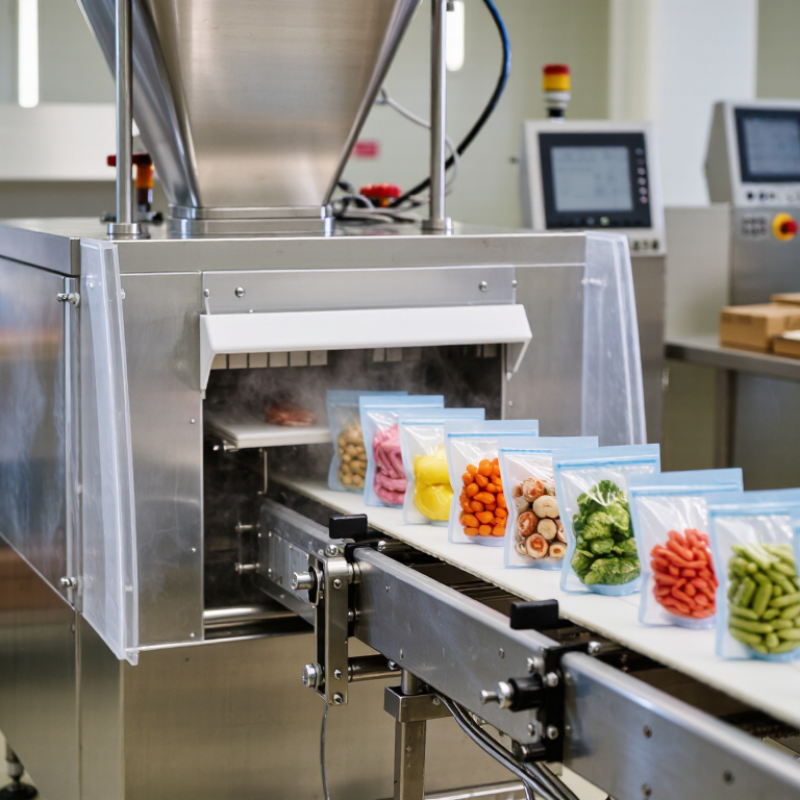
Choosing a Frozen Food Vacuum Doypack Machine is a practical decision, not a simple equipment purchase. Frozen products face sharp edges, low temperatures, frost, and demanding transport conditions. A weak seal can fail quietly inside a cold warehouse. The result may be freezer burn, leakage, or expensive product loss.
Gordon L. Robertson, a respected food-packaging researcher and author, stated, “The primary purpose of food packaging is to protect the food from the environment.” This principle remains highly relevant. A suitable machine should create consistent vacuum levels, reliable heat seals, and accurate filling performance. It should also handle laminated films without damaging the pouch surface. Operators need to inspect seal width, pouch alignment, air removal, and temperature settings during real production runs. Small details matter. Especially at -18°C.
This guide examines machine structure, packaging speed, pump capacity, sealing technology, cleaning access, and after-sales support. It also considers whether the machine matches frozen vegetables, seafood, meat, or prepared meals. A model that performs well in a factory demonstration may behave differently with wet product or uneven pouch loading. That possibility deserves attention. No checklist is perfect.
The best choice balances product protection, labor efficiency, maintenance needs, and long-term operating cost. Buyers should request sample tests, review service records, and compare actual seal results before signing a purchase agreement. Reliable evidence is more valuable than impressive promises.
Define Product and Pack Specs: −18°C Storage, Fat, Bone, and Fill Weight
Choosing a frozen food vacuum doypack machine starts with the product, not the machine. Set the storage target at −18°C or colder. The International Institute of Refrigeration identifies −18°C as the standard reference for frozen food storage. At this temperature, microbial growth is largely stopped, but oxidation and dehydration can continue. The packaging must still protect quality.
Fat and bone require practical testing. Fat can contaminate the sealing area and create tiny leak paths. Bone edges may puncture the pouch during filling, vacuuming, or transport. Select a puncture-resistant film and use rounded product handling surfaces. Run trials with the coldest product temperature. A clean seal is not always a strong seal. That lesson is easy to miss.
Fill weight affects dosing accuracy, pouch volume, and vacuum performance. Codex General Standard for the Labelling of Prepackaged Foods recommends clear net-quantity declarations, so the machine should work with a verified weighing system. Use test batches across the smallest and largest target weights. Check seal strength, leakage, pouch shape, and product position after freezing. Reports from the European Commission’s Joint Research Centre show that cold-chain variation remains a significant food-quality risk, so test realistic temperature changes. I would not rely on one perfect factory sample. Real products are uneven. Bones shift, fat smears, and operators make mistakes.
Select Barrier Film by OTR/MVTR Tests: ASTM D3985 and ISO 15105-2
When choosing a frozen food vacuum doypack machine, start with the film, not the machine catalogue. Oxygen and moisture can damage color, flavor, texture, and freezer stability. The UNEP Food Waste Index Report 2024 estimated 1.05 billion tonnes of food waste in 2022. Packaging cannot solve every loss, but poor barrier performance can accelerate quality decline.
Specify OTR testing under ASTM D3985 or ISO 15105-2. ASTM D3985 uses a coulometric sensor, while ISO 15105-2 uses an equal-pressure method. Request the test temperature, humidity, film thickness, and conditioning time. Results without these details are difficult to compare.
Keep the units consistent, such as cm³/m²/day for OTR. For MVTR, use a dedicated moisture method, such as ASTM F1249. These standards measure different risks.
A practical trial should test the complete pouch. Check oxygen and moisture transmission first. Then inspect seals after vacuuming frozen contents. Film stiffness, ice crystals, powder, and wrinkles can weaken the seal. The machine needs stable vacuum control and sufficient sealing pressure.
I would not trust one dry laboratory result. Real packs are messier. FAO’s 2019 State of Food and Agriculture report estimated that 14% of food is lost between harvest and retail. That figure reminds us to test transport, storage, and seal durability, not only barrier values. A perfect number is not the goal; a repeatable result is.
Match Vacuum and Sealing Systems: Target ≤2% Residual Oxygen
Choosing a frozen food vacuum doypack machine starts with the oxygen target. For many products, residual oxygen should reach 2% or below after packaging. This level helps reduce oxidation, color changes, and flavor loss. It does not guarantee shelf life. Product formulation, storage temperature, and film performance still matter.
A practical machine should combine vacuum removal with controlled gas flushing. Vacuum alone may leave air trapped around frozen vegetables, irregular meat pieces, or rough surfaces. Gas flushing can replace that air, but excessive pressure may disturb the product or stretch the pouch. During trials, measure oxygen with a calibrated analyzer after the package has stabilized. Test several bags, not one lucky sample. Small differences matter.
Sealing deserves equal attention. Ice particles, sauce residue, or a cold seal area can create microscopic leaks. Select adjustable sealing temperature, pressure, and dwell time. A cooling stage can improve seal strength before discharge. Check finished packs with leak tests and visual inspections. One imperfect seal can raise oxygen quickly. Do not judge performance only by the machine display. I have seen strong vacuum readings alongside weak seals. Recheck settings when product temperature, pouch size, or filling speed changes. A reliable selection balances chamber capacity, cycle time, gas control, and repeatable sealing. Keep records. They reveal problems that operators may miss.
How to Choose a Frozen Food Vacuum Doypack Machine
Match vacuum and sealing systems to achieve residual oxygen at or below 2%. The chart shows representative headspace oxygen readings after sealing frozen-food doypacks under different vacuum conditions. Lower residual oxygen generally indicates more effective air removal and sealing performance.
Selection guidance: A standard sealing system may not consistently meet the ≤2% requirement at moderate vacuum levels. For frozen products, prioritize a machine with stable deep-vacuum control, reliable pouch opening, clean seal areas, and an active or controlled sealing system. Validate the final configuration using headspace oxygen testing on production samples.
Size the Doypack Line: 20–60 Packs/Min, Seal Width, and Changeover
Choosing a frozen food vacuum doypack machine starts with the real production target, not the advertised maximum. A 20-pack-per-minute line may suit mixed products and frequent checks. A 60-pack-per-minute line needs steady feeding, accurate pouch positioning, and reliable vacuum control. Frozen pieces can bridge in the feeder, especially when surfaces carry ice. Keep a practical buffer of 10–15% below the machine’s claimed speed.
Measure the pouch before selecting the sealing unit. Seal width affects leak resistance, material use, and usable pack space. For many frozen foods, a 10–15 mm seal provides a useful working range, but the final width depends on film structure and product contamination. Meat edges, sauce, or frost can enter the seal area. Test filled pouches, not empty samples. Check seal strength after freezing, handling, and thawing. Small trials reveal more than a clean factory sample.
Changeover time often decides whether 20 or 60 packs per minute is economical. Record the minutes needed to replace pouch guides, adjust filling height, set vacuum time, and clean contact surfaces. Tool-free adjustments can reduce errors, but only when operators can read the settings clearly. I have seen teams plan a ten-minute changeover that takes twenty-five minutes in cold conditions. A neat spreadsheet can still mislead. Leave room for inspection, film variation, and operator learning. Validate the chosen line with several pouch sizes and at least one difficult frozen product.
Validate Hygiene and Reliability: HACCP, IP69K, Leak Tests, and ROI
Choosing a frozen food vacuum doypack machine starts with hygiene, not speed. In a practical factory trial, inspect product-contact surfaces after a full cleaning cycle. Crevices, exposed threads, and trapped water often reveal weak design. HACCP requires hazard analysis, critical control points, monitoring, and corrective actions, according to Codex Alimentarius CXC 1-1969, revised in 2022. Ask suppliers for documented cleaning procedures and validation records.
IP69K protection is useful for machines facing hot, high-pressure washdowns. However, IP69K alone does not prove hygienic construction. Check weld quality, drainage, food-grade materials, and access for inspection. ISO 20653:2013 defines protection testing, but it does not replace a site-specific sanitation assessment. Small detail. Big consequence.
Leak testing should cover every pouch format, film thickness, and sealing temperature. Measure vacuum loss, seal strength, and rejected packs during production, not only during acceptance testing. The UNEP Food Waste Index Report 2024 estimated 1.05 billion tonnes of food waste in 2022; preventing one leaking pouch is modest, but repeated failures become expensive.
Calculate ROI from labor savings, reduced giveaway, lower rejects, and fewer sanitation delays. I would not trust optimistic payback claims without three months of production data. Incomplete records remain a risk.
FAQS
Set the target at −18°C or colder. This temperature largely stops microbial growth. Oxidation and dehydration can continue, so packaging still matters.
Fat may smear across the sealing area and create tiny leak paths. Bone edges can puncture pouches during filling or transport. Test with the coldest product.
Choose puncture-resistant film with enough flexibility. Rounded handling surfaces can reduce damage. Product pieces are never perfectly positioned.
Fill weight influences dosing accuracy, pouch volume, and vacuum performance. Test the smallest and largest target weights. Verify the weighing system.
Check seal strength, leakage, pouch shape, and product position. Inspect packs after realistic temperature changes. One perfect sample proves very little.
Many products should reach 2% residual oxygen or below. This can reduce oxidation, color changes, and flavor loss. It does not guarantee shelf life.
Not always. Air can remain around vegetables, rough surfaces, or uneven meat pieces. Gas flushing may replace trapped air more effectively.
Use adjustable temperature, pressure, and dwell time. A cooling stage may strengthen the seal before discharge. Ice, sauce, and cold sealing areas need attention.
Measure oxygen with a calibrated analyzer after package stabilization. Test several bags, not one lucky sample. Small differences often reveal hidden problems.
Record product temperature, pouch size, filling speed, vacuum results, and sealing settings. Recheck settings when conditions change. Operators sometimes miss gradual faults.
Conclusion
Choosing the right Frozen Food Vacuum Doypack Machine starts with clearly defining the product and packaging requirements. Consider frozen storage at −18°C, product fat content, bone structure, portion size, and target fill weight, as these factors affect bag strength, vacuum performance, and sealing consistency. Select barrier film based on measured oxygen and moisture protection, using OTR and MVTR results from recognized test methods such as ASTM D3985 and ISO 15105-2. The packaging system should be matched to the product so that vacuum efficiency and sealing performance can achieve a target residual oxygen level of 2% or lower.
Line capacity is another important consideration. A suitable system may operate within a range of 20–60 packs per minute while providing the required seal width and efficient changeovers for different bag sizes. Hygiene and reliability should also be validated through HACCP-based procedures, IP69K-rated cleanability, routine leak testing, and documented maintenance. Finally, evaluate labor savings, material use, uptime, and expected payback to confirm that the machine delivers practical long-term value.

Blog Tags: