
XinTu Machinery Co., Ltd. – Packaging Machine Industry Blog
Technical Articles & Knowledge

Packaging Machine Blog & Insights

Expert guides, maintenance advice & machinery innovations from XinTu Machinery Co., Ltd.
XinTu Machinery Co., Ltd. – Doypack & VFFS Packaging Guides
Industry Expertise

Automated Packaging Line Solutions

Learn how to optimize production efficiency with advanced VFFS and Doypack systems

0%

Choosing a Long Nails Screws Cartoning Machine in 2026 requires more than comparing catalog speeds. A reliable decision begins with the product itself: nail length, screw diameter, head shape, surface finish, and bundle quantity. These details affect feeding accuracy and carton stability. A machine designed for short fasteners may struggle with 150-millimeter nails or mixed hardware.

Real packaging conditions matter. Dust from metal parts can enter sensors and increase stoppages. Carton strength, glue type, and required output should be tested together. A published speed of 60 cartons per minute may fall to 42 during frequent size changes. That difference is easy to overlook. Ask suppliers for a live demonstration using your actual nails, screws, cartons, and packing pattern.

Look closely at servo control, counting sensors, tool-free adjustments, safety guarding, and jam recovery. Changeover time matters when production runs include several carton sizes. A clear control panel helps operators respond without guessing. Spare-part availability, remote support, training, and maintenance records also reveal a supplier’s practical reliability. Documentation should cover installation, cleaning, calibration, and safe operation.

No machine is perfect. Even a well-engineered system may need feeder adjustments after humidity or product batches change. That is why acceptance testing should include continuous operation, restart tests, rejected cartons, and operator feedback. Independent technical advice can reduce expensive mistakes, but supplier claims still deserve verification. This guide examines the selection criteria that make a Long Nails Screws Cartoning Machine productive, maintainable, and suitable for responsible industrial packaging in 2026.
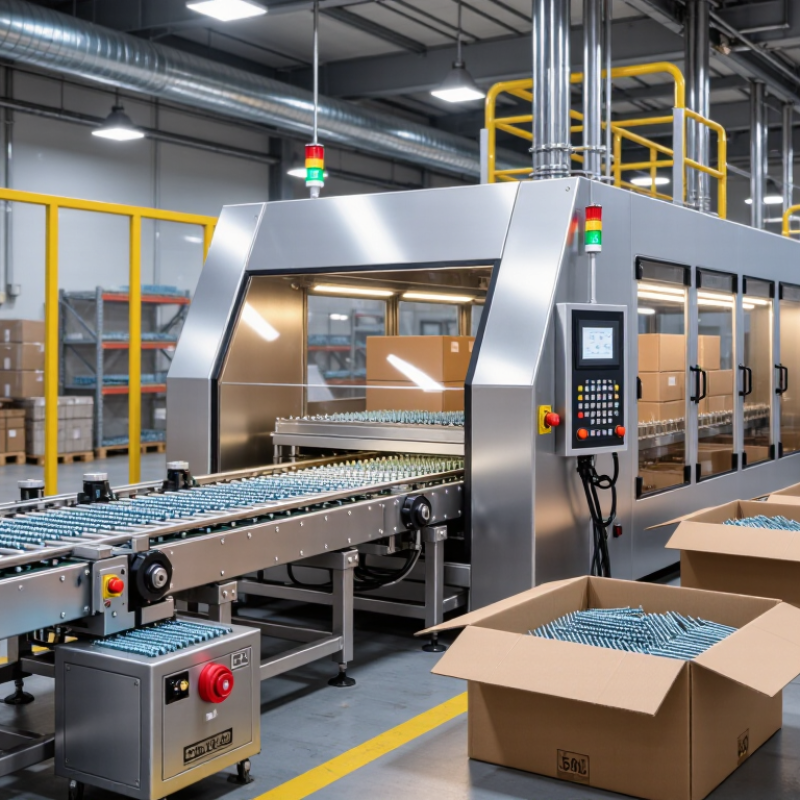
How to Choose a Long Nails Screws Cartoning Machine in 2026?

Understanding Long Nails Screw Cartoning Requirements

Choosing a long nails screw cartoning machine begins with product geometry, not machine speed. Measure length, shank diameter, head shape, and surface finish. Long products can bridge inside hoppers or rotate during feeding. A 150 mm nail behaves differently from a 60 mm screw. Test mixed batches, because real production is rarely perfectly uniform. Record jams, misfeeds, and carton damage during at least one full shift.

Carton requirements also matter. Define the inner length, width, depth, board thickness, and closing style. Confirm whether products need counting, weighing, or fixed bundles.

The International Federation of Robotics reported 541,302 industrial robots installed worldwide in 2023, a 4% annual increase. This supports automated handling, but automation alone cannot correct poor product presentation. PMMI’s packaging machinery research also identifies labor availability and line integration as continuing investment drivers. These reports offer useful direction, although they cannot replace a factory trial.

Tips: Ask for a sample-run test using your longest and heaviest items. Check feeding stability at low and high speeds. Watch the carton flaps closely. Request data for changeover time, compressed-air use, rejection rate, and operator access. A claimed speed may be measured without cartons or quality checks. That is often misleading. Keep a reserve of 10–15% capacity for product variation and future demand. Also review cleaning points and sensor protection; small metal fragments can quietly affect accuracy.

Matching Machine Design with Nail Size, Shape, and Packaging

In 2026, choosing a cartoning machine starts with the nail, not the carton. Long nails and screws need a controlled feeding path to prevent bridging and overlap. Measure length, shank diameter, head width, and point shape before requesting machine data. Small variations matter. A 90 mm nail behaves differently from a 120 mm nail, even with the same head style. Test samples should represent real production, including bent pieces and surface finishes. This is practical evidence, not a catalog promise.

Machine design must match the fastener’s geometry and planned pack count. Vibratory feeders suit consistent shapes, while irregular nails may need gentler linear feeding. Loose packing can use weighing or counting systems, but long pieces may settle unevenly. Vision checks or check weighing can detect missing pieces. Carton length should provide clearance without letting nails rotate and jam. Narrow cartons need adjustable guide rails and stable pressure. Too much pressure can scratch coated surfaces. Too little creates crooked cartons.

During trials, record speed, stoppages, noise, dust, and changeover time. Ask the supplier to run your actual nails and cartons, not substitutes. Verify guards, emergency stops, cleaning access, and spare-part availability in writing. I would not accept a high output figure without rejection-rate data. That figure can mislead. A slower machine may reduce waste and operator intervention. Leave room for adjustment. Nail dimensions can change after tooling revisions, and packaging plans may evolve.

Evaluating Speed, Accuracy, Automation, and Production Capacity

When choosing a long nails screws cartoning machine in 2026, measure more than cartons per minute. Match speed with nail length, screw diameter, carton style, and product flow. A machine rated at 80 cartons per minute may slow sharply with mixed sizes. Request a trial using your actual screws. Check counting accuracy, reject rates, and changeover time. A practical target is stable output above 98% counting accuracy, verified over several production runs.

Automation should remove repetitive handling, not hide problems. Servo-driven feeders can control batches more consistently than manual loading. Vision inspection may detect missing screws or damaged cartons before sealing.

The International Federation of Robotics reported more than 541,000 industrial robots installed worldwide in 2023. This supports the wider shift toward automated production, but robotics alone cannot fix poor feeding design.

Capacity planning also matters. Compare hourly output with your peak demand, planned downtime, and future product variations. Oversizing the line can waste floor space and capital.

Tips: Ask for documented test results, not optimistic estimates. Record changeover minutes with three carton sizes. Check whether operators can clear jams safely and quickly. PMMI industry reports repeatedly identify labor availability and flexible automation as major packaging concerns. Still, perfect accuracy is unrealistic. Dust, bent screws, and inconsistent cartons will expose weak settings. Leave capacity headroom of roughly 15% if demand may grow. The right machine feels predictable, not merely fast.

Checking Material Compatibility, Safety Features, and Maintenance Needs

How to Choose a Long Nails Screws Cartoning Machine in 2026?

Material compatibility should guide the purchase. Long nails and screws can be sharp, heavy, oily, or zinc-coated. Their edges may scratch painted steel guides. Test the actual products, not only sample cartons. Check stainless steel contact surfaces, belt grip, hopper geometry, and carton-board strength. Small gaps hurt. A 2024 PMMI packaging report identifies changeover flexibility and labor availability as major equipment concerns. Therefore, choose adjustable lanes and tool-free format changes. Ask for documented tests using your longest and heaviest fasteners.

Safety features deserve equal attention. The machine should include guarded moving parts, interlocked doors, emergency stops, overload detection, and controlled restart functions. ISO 13849-1 provides a recognized framework for safety-related control systems. OSHA’s 2023 manufacturing data recorded a high number of nonfatal workplace injuries, reminding buyers that guarding cannot be treated as decoration. Inspect the discharge area carefully. Falling metal pieces can become projectiles. Do not guess.

Maintenance needs often decide the real cost. The U.S. Department of Energy reports that predictive maintenance can reduce maintenance costs by 25% to 30% and lower breakdowns substantially. Select accessible bearings, visible sensors, standard electrical components, and clear lubrication points. Keep spare belts and sensors nearby. A 2024 Plant Engineering maintenance survey also emphasizes preventive planning and technician training. I would still question optimistic service claims. Run a site trial for several weeks. Listen for rattling, measure jam frequency, and record cleaning time. Perfect machines are rare. Reliable routines matter more.

Comparing Costs, Customization Options, and Supplier Support

How to Choose a Long Nails Screws Cartoning Machine in 2026?
Comparing Costs, Customization Options, and Supplier Support

A low purchase price rarely reflects the full cost of cartoning long nails screws. Include tooling, installation, operator training, energy use, maintenance, and rejected cartons. Ask for a running test with your actual screw length, head shape, and carton size. Long pieces may tilt, bridge, or damage carton flaps. A machine that counts accurately on paper can perform differently at production speed.

Customization should match your product range, not every imagined future order. Check hopper capacity, counting sensors, carton dimensions, changeover time, and speed control. Servo adjustments can improve repeatability, but they may increase service costs. Quick-change guides are useful. Still, complex options can create more settings and more mistakes. I would request sample cartons and a written changeover procedure before approving the design. That step is easy to overlook.

Supplier support often decides whether savings survive the first year. Confirm commissioning, operator training, spare-parts availability, remote troubleshooting, and response times. Request references from factories packaging similar long screws. Also examine the warranty exclusions. A low-cost machine becomes expensive when one sensor stops production for three days. My evaluation would include a trial run, maintenance records, and a clear list of consumables. I would not accept vague promises. Some uncertainty remains when product dimensions change later.

How to Choose a Long Nails Screws Cartoning Machine in 2026? - Comparing Costs, Customization Options, and Supplier Support

Machine Configuration Typical Purchase Cost in 2026 Typical Output Suitable Nail or Screw Length Carton Size Flexibility Typical Changeover Time Automation Level Customization Potential Supplier Support Requirements Best Application Overall Value
Semi-Automatic Cartoning Machine US$18,000–35,000 15–35 cartons/minute Up to approximately 150 mm, depending on carton and product arrangement Low to medium; normally one carton format with limited adjustment 30–60 minutes Operators usually load cartons or product manually; automatic filling and closing are possible Limited; suitable for basic carton forming, counting, and closing Remote commissioning, operating training, spare-parts list, and troubleshooting documentation Small and medium production runs with several product types ★★★★☆ Cost-efficient
Intermittent-Motion Horizontal Cartoner US$35,000–70,000 30–80 cartons/minute Approximately 80–200 mm, subject to feeder design and carton geometry Medium; adjustable carton length, width, and height within a defined range 20–45 minutes Automatic carton erecting, product insertion, leaflet insertion, and closing Factory acceptance testing, installation guidance, recipe setup, and response within one business day Regular production of long screws or nails in standard retail cartons ★★★★★ Balanced choice
Servo-Driven Intermittent Cartoner US$55,000–95,000 50–110 cartons/minute Approximately 100–250 mm with an appropriate product collation system Medium to high; electronic adjustment improves repeatability between formats 10–30 minutes with stored recipes Fully automatic product feeding, cartoning, batch control, and carton closing On-site installation, operator and maintenance training, software backup, and preventive-maintenance schedule High-volume lines requiring accurate counts and frequent format changes ★★★★★ High productivity
Continuous-Motion Horizontal Cartoner US$70,000–130,000 100–220 cartons/minute Approximately 80–180 mm; long products may require specialized collation Medium; highest efficiency is usually achieved with a stable carton range 20–40 minutes Continuous automatic loading and closing with synchronized servo systems Medium; customization is possible but generally increases engineering and validation cost Strong technical support, commissioning engineers, spare servo components, and rapid service access Large-volume production with consistent carton specifications ★★★★☆ Best for speed
Modular Cartoning Line with Counting and Weighing US$85,000–180,000+ 40–160 cartons/minute, depending on count, product shape, and weighing method Approximately 50–250 mm; suitable for mixed lengths when the feeder is correctly configured High; multiple carton sizes can be supported with dedicated tooling and recipes 20–60 minutes, depending on modules and tooling Automatic feeding, counting or weighing, cartoning, coding, inspection, and case packing options Project management, line layout, integration testing, validation documents, and long-term parts availability Factories producing several long-nail or screw specifications for retail and industrial packaging ★★★★★ Most adaptable
Custom High-Load Cartoner for Extra-Long Fasteners US$120,000–250,000+ 20–80 cartons/minute, depending on product weight and loading pattern Approximately 150–400 mm or more with custom product handling High for the approved product and carton range; requires engineered tooling 30–90 minutes Integrated feeding, orientation, counting, carton loading, closing, coding, and quality checks On-site engineering, product trials, sample testing, documented acceptance criteria, and guaranteed spare-parts support Specialized long-fastener products, heavy cartons, or unusual product arrangements ★★★☆☆ Highest initial investment

Cost figures are indicative 2026 market ranges in U.S. dollars for the primary cartoning equipment only. Final pricing can change significantly with feeder design, counting or weighing systems, carton materials, coding and vision inspection, line integration, installation, import duties, and validation requirements. Confirm product dimensions, carton drawings, target speed, counting accuracy, and sample-run results before placing an order.

FAQS

What should be measured before choosing a cartoning machine?

Measure product length, shank diameter, head width, point shape, and surface finish. Small differences can change feeding behavior.

Why do long nails and screws need controlled feeding?

Long pieces may bridge, overlap, tilt, or rotate inside the feeding system. A 150 mm item behaves differently from a 60 mm item. That matters.

What samples should be used for a machine trial?

Use your longest and heaviest products with actual cartons. Include mixed batches, bent pieces, and different surface finishes. Test real production conditions, not perfect samples.

Which feeding system suits irregular products?

Consistent shapes may work with vibratory feeding. Irregular products may need gentler linear feeding. The wrong feeder can increase scratches and misfeeds.

What carton details must be confirmed?

Confirm inner length, width, depth, board thickness, and closing style. Leave enough clearance for the products, but prevent unwanted movement. Narrow cartons need adjustable guides.

What performance data should be recorded during testing?

Record speed, stoppages, rejection rate, noise, dust, changeover time, and carton damage. Check performance at low and high speeds. Do not trust speed alone.

How much extra capacity should the machine provide?

Keep roughly 10–15% reserve capacity for product variation and future demand. A slower machine may reduce waste and operator intervention. I might underestimate future changes.

Which customization options are worth considering?

Useful options include adjustable guides, speed control, counting sensors, and quick-change parts. Avoid unnecessary complexity. More settings can create more operator mistakes.

What supplier support should be checked before purchase?

Confirm installation, training, spare parts, remote troubleshooting, response times, and warranty exclusions. Request references from similar production lines. Vague promises are risky.

What maintenance details deserve attention?

Check cleaning points, sensor protection, guards, emergency stops, and spare-part access. Small metal fragments can quietly reduce counting accuracy. The design may look excellent, yet cleaning access could disappoint.

Conclusion

Choosing the right Long Nails Screws Cartoning Machine in 2026 begins with a clear understanding of your packaging requirements, including nail length, diameter, shape, carton dimensions, and production targets. The machine should be designed to handle the specific size and form of long nails or screws while providing stable feeding, accurate counting, and secure carton forming and sealing. Consider its operating speed, packing accuracy, automation level, and capacity to ensure it matches both current demand and future growth.

Material compatibility, operator safety, easy cleaning, and convenient maintenance are also essential factors. A reliable machine should support suitable carton materials, include practical protective features, and allow quick access to key components for servicing. When comparing options, evaluate the total cost of ownership rather than only the purchase price. Customization flexibility, spare-part availability, technical training, installation assistance, and responsive supplier support can significantly improve long-term efficiency and reduce downtime.

Logan

Logan

Logan is a seasoned marketing professional with a profound understanding of our company's products and services. With years of experience in the industry, he brings a wealth of knowledge and expertise to the table, making him an invaluable asset to our team. Logan is dedicated to staying ahead of......