
Packaging Machine Blog & Insights
Expert guides, maintenance advice & machinery innovations from XinTu Machinery Co., Ltd.
Automated Packaging Line Solutions
Learn how to optimize production efficiency with advanced VFFS and Doypack systems
How to Choose a Toothpaste Tube Filling Sealing Machine?
Table of Contents
- Understanding Toothpaste Tube Filling and Sealing Machine Types
- Assessing Toothpaste Formula, Tube Materials, and Production Requirements
- Comparing Filling Accuracy, Sealing Methods, and Machine Performance
- Checking Automation, Hygiene Standards, Safety, and Maintenance Features
- Evaluating Supplier Support, Total Costs, and Long-Term Production Value
- FAQS
- Conclusion
- Related Posts
Choosing a Toothpaste Tube Filling Sealing Machine is not merely a price comparison. It is a production decision that affects accuracy, hygiene, speed, and customer perception. A machine may look impressive during a short demonstration, yet struggle with thick fluoride paste, unstable tube shoulders, or frequent size changes. The real test begins after installation.
Daniel Reed, a packaging automation engineer with more than fifteen years of factory experience, says, “The best machine is the one that keeps filling accurately when production conditions are no longer perfect.” That observation deserves attention. Ask suppliers for practical evidence, not attractive brochures. Check filling tolerance, sealing strength, tube compatibility, cleaning access, and replacement-part availability. PE, laminate, and aluminum-plastic tubes may require different sealing settings. Small details matter.
Think beyond rated speed. Can operators adjust the machine without guesswork? Does the control panel record faults clearly? Can the filling nozzle prevent dripping between cycles? These questions reveal more than a catalog specification. A reliable Toothpaste Tube Filling Sealing Machine should support stable output while protecting product quality and workplace safety. It should also allow future changes, such as larger tube volumes, new paste formulas, or additional inspection systems.
Some buyers focus too heavily on maximum output. That can be a costly mistake. A slower machine with consistent sealing may produce less waste and fewer rejected tubes. No machine is perfect. Even experienced teams may overlook changeover time or cleaning difficulty. Careful trials, reference checks, and transparent technical documentation create a stronger basis for selection. The right choice is not always the fastest one. It is the machine that performs reliably on an ordinary production day.
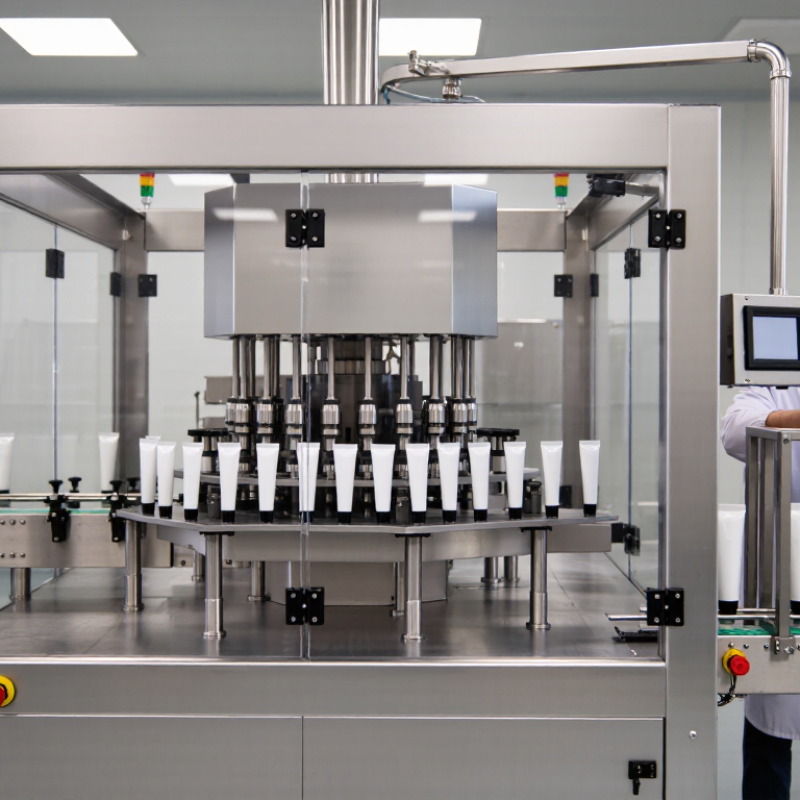
Understanding Toothpaste Tube Filling and Sealing Machine Types
How to Choose a Toothpaste Tube Filling Sealing Machine?
Understanding machine types starts with the tube material. Plastic tubes usually need hot-air, ultrasonic, or impulse sealing. Aluminum tubes commonly use crimping. Laminate tubes require careful heat control because their layers can deform. According to Fortune Business Insights, the global toothpaste market reached about USD 19.52 billion in 2023 and may reach USD 26.58 billion by 2032. This growth increases pressure on stable, flexible production lines.
Intermittent machines suit small or medium batches, especially when products change often. Rotary machines offer higher output and smoother continuous operation. Servo-driven filling systems improve dosing accuracy and reduce adjustment time. PMMI industry reports repeatedly identify labor shortages as a major reason for automation investment. Still, automation is not automatically better. A complex line may create longer setup times and require stronger technical support.
Check filling accuracy, sealing temperature, changeover time, and cleaning access during a factory trial. Ask operators to test thick gel, mint paste, and products with fine particles. According to Smithers’ flexible packaging research, lightweight and recyclable structures are influencing future packaging design. This matters because a new tube material may require different sealing settings. A common mistake is choosing speed before confirming tube compatibility. That decision can become expensive.
Assessing Toothpaste Formula, Tube Materials, and Production Requirements
Choosing a toothpaste tube filling sealing machine starts with the formula, not the machine’s advertised speed. Viscosity, moisture, foaming behavior, and abrasive particles affect filling stability. A thick herbal paste may need stronger mixing and wider product passages. A smooth gel may require different dosing control. In practical testing, small formula changes can create air pockets or uneven fills. Do not rely on laboratory results alone. Production behavior can be less predictable.
Tube material also matters. Plastic, laminate, and aluminum tubes respond differently to heat, pressure, and sealing time. Confirm the tube diameter, shoulder design, and cap position before selecting equipment. The sealing unit should create a clean, consistent seal without damaging printed surfaces. A machine may perform well with one tube type, then struggle after a material change. That possibility is often underestimated.
Production requirements should include filling volume, target output, changeover frequency, and cleaning procedures. Check whether the dosing system handles your smallest and largest tube sizes accurately. Ask for trials using your actual formula and packaging. Watch for dripping, product buildup, and rejected seals. These details reveal more than a catalog page.
Tips: Test several batches, not one sample. Record fill accuracy and sealing temperature. Leave room for future tube sizes. A cheaper machine can become expensive when adjustments remain manual. Be honest about your production weaknesses. They influence the right choice.
How to Choose a Toothpaste Tube Filling Sealing Machine? – Assessing Toothpaste Formula, Tube Materials, and Production Requirements
| Assessment Dimension | Typical Condition or Data Range | Recommended Machine Configuration | Key Technical Considerations |
|---|---|---|---|
| Toothpaste Viscosity | Common toothpaste products are generally high-viscosity pastes. A practical design range is approximately 50,000–250,000 mPa·s, depending on formulation and test method. | Servo-driven piston, plunger, or progressive-cavity filling system | The filling system should provide stable metering without excessive shear, air entrainment, or product dripping. Final selection should be based on an actual product trial. |
| Abrasive Content | Silica, calcium carbonate, and other polishing agents may be present at significant levels in conventional toothpaste. | Wear-resistant product-contact components and low-shear transfer design | Use abrasion-resistant materials for pumps, valves, nozzles, and seals. Minimize sharp internal corners and avoid unnecessary restrictions in the product path. |
| Particle or Granule Size | Most conventional toothpaste is smooth, but whitening particles, herbal fragments, or specialty granules may create additional filling challenges. | Large-passage valves and appropriately sized filling nozzles | Confirm the maximum particle size before specifying the valve and nozzle. A small orifice may cause blockage, pressure fluctuation, or inconsistent fill weight. |
| Foaming and Air Sensitivity | Some formulations can trap air during mixing or pumping, resulting in voids, splashing, or inaccurate filling. | De-aerated product supply, slow-start filling, and anti-drip nozzles | The hopper and transfer line should be designed to reduce turbulence. If the formula is air-sensitive, consider vacuum de-aeration before filling. |
| Formula Temperature | Many toothpaste products are filled near room temperature, while temperature-sensitive formulas may require controlled warming or cooling. | Temperature-controlled hopper and insulated product pipe, when required | Temperature changes can affect viscosity and fill accuracy. The selected machine should maintain a stable product temperature without damaging flavoring, active ingredients, or packaging. |
| Multi-Color or Striped Toothpaste | Striped products may contain two or more visually distinct phases that must remain separated until discharge. | Multi-color filling manifold with synchronized dosing channels | The manifold should provide balanced flow and easy cleaning. The formula must also have suitable rheology to maintain a stable stripe pattern. |
| Plastic Tube Material | Common structures include polyethylene-based tubes, including single-layer, multi-layer, and barrier constructions. | Hot-air, impulse, or ultrasonic sealing selected according to tube structure | Tube dimensions, wall thickness, barrier layer, and tail geometry affect heating time, sealing temperature, and seal strength. Validate the seal using production tube samples. |
| Laminated Tube Material | Plastic laminate and aluminum-plastic laminate tubes are used when improved barrier performance, appearance, or product compatibility is required. | Controlled hot-air sealing or tube-specific sealing tooling | Laminated tubes require accurate temperature, dwell time, and pressure control. Excessive heat may damage the laminate or cause cosmetic deformation. |
| Metal Tube Material | Aluminum tubes are used for selected pharmaceutical, cosmetic, and specialty products. | Mechanical folding or crimping unit with metal-tube-compatible tooling | The machine must support the required tail-fold style, coding position, and tamper-evident or secondary closure requirements. Filling pressure should avoid tube distortion. |
| Tube Diameter | Typical toothpaste tube diameters are approximately 16–50 mm, although the actual range depends on the package design. | Interchangeable tube holders, guides, filling nozzles, and sealing tooling | Confirm tube diameter, shoulder shape, length, cap orientation, and tail width. Change parts should be designed for repeatable installation and quick adjustment. |
| Filling Volume | Common retail toothpaste fills include approximately 20–250 mL, with many consumer sizes falling between 50 and 150 mL. | Servo-controlled dosing with recipe-based volume adjustment | Select a dosing range that covers both current and future products. Verify accuracy at minimum, nominal, and maximum fill volumes rather than at only one setting. |
| Required Production Speed | Small and medium production lines may require approximately 30–100 tubes per minute; higher-volume lines may require 100–250 or more tubes per minute. | Single-nozzle, dual-nozzle, or multi-nozzle layout according to output target | Rated speed should not be treated as guaranteed output. Allow for tube loading, product viscosity, changeovers, cleaning, inspection, and rejected containers. |
| Expected Overall Equipment Effectiveness | A practical planning target is often below the machine's theoretical maximum speed because of setup, cleaning, minor stops, and quality checks. | Machine with accessible change parts, diagnostic controls, and quick-clean product paths | Capacity calculations should include availability, performance, and quality losses. A lower nominal speed with reliable operation may provide higher actual output. |
| Fill-Weight Accuracy | The required tolerance depends on product specifications, legal metrology rules, package size, and the customer's quality standard. | Closed-loop servo dosing with periodic checkweighing | Establish an acceptance tolerance before purchase. Accuracy can be influenced by viscosity variation, temperature, air bubbles, valve timing, and tube positioning. |
| Sealing Quality | Important indicators include seal strength, leak tightness, tail appearance, correct fold or weld geometry, and resistance to transport stress. | Adjustable sealing temperature, pressure, dwell time, and cooling where applicable | Inspect seals using visual checks, leak testing, seal-strength testing, and accelerated storage or transport tests appropriate to the product. |
| Coding and Traceability | Typical markings include batch number, manufacturing date, expiry date, or other legally required information. | Integrated or synchronized coding station positioned before or after sealing | Confirm the available coding area, print contrast, code location, data interface, and compatibility with the tube surface and production-management system. |
| Hygiene and Product Contact Materials | Toothpaste filling equipment should use cleanable, corrosion-resistant, product-compatible contact materials. | Stainless-steel product-contact construction with hygienic fittings | Specify material certificates, surface finish requirements, gasket compatibility, drainage, tool-free disassembly where practical, and access for inspection. |
| Cleaning and Changeover | Changeover frequency may range from several times per week to several times per shift, depending on the product portfolio. | Quick-release nozzles, removable hopper parts, recipe storage, and accessible cleaning zones | Evaluate total changeover time, not only the time required to replace tube tooling. Include product flushing, sanitation, line clearance, and verification. |
| Automation Level | Options range from manually loaded semi-automatic equipment to fully automatic lines with tube feeding, filling, sealing, coding, inspection, and discharge. | Select automation according to labor availability, production volume, and quality requirements | Higher automation can improve consistency but may increase investment, maintenance, commissioning time, and change-part requirements. |
| Quality Inspection | Typical checks include tube presence, fill level, cap presence, seal integrity, code readability, and product leakage. | In-line sensors, vision inspection, reject station, and optional checkweigher | Define which defects must be detected automatically and establish reject confirmation. Inspection systems should be validated using known good and known defective samples. |
| Utilities and Installation | Requirements commonly include electrical power and, for many pneumatic systems, clean compressed air. Exact values depend on machine design and output. | Machine selected to match available power, air pressure, floor space, and environmental conditions | Confirm electrical standards, compressed-air quality, exhaust or ventilation needs, machine footprint, access clearance, noise limits, and floor loading before installation. |
| Recommended Validation Trial | Use the actual toothpaste formula, tube materials, fill volumes, cap configuration, and target speed for testing. | Factory acceptance test based on pre-agreed performance criteria | Record fill-weight variation, sealing temperature and time, leakage results, changeover duration, cleaning effort, reject rate, and continuous operating stability. |
Comparing Filling Accuracy, Sealing Methods, and Machine Performance
Choosing a toothpaste tube filling sealing machine requires more than checking its advertised speed. Filling accuracy protects product consistency and reduces material waste. Servo-driven pumps usually offer precise dosing, especially with thick toothpaste. However, accuracy can change when viscosity, temperature, or tube size changes. Request test results using your actual formula and packaging.
Sealing quality deserves equal attention. Hot-air sealing suits many plastic laminate tubes, while ultrasonic sealing can provide clean, fast joints with limited heat exposure. Aluminium-plastic tubes may require different folding or crimping settings. Inspect seal strength, appearance, and leakage after production. A strong seal should survive transport without wrinkles, gaps, or product contamination. Machine performance also includes changeover time, cleaning access, control stability, and compressed-air consumption. A fast machine is not efficient if adjustments take hours.
Checking Automation, Hygiene Standards, Safety, and Maintenance Features
Choosing a toothpaste tube filling and sealing machine requires more than checking its output speed. The World Health Organization’s Global Oral Health Status Report (2022) estimates that 3.5 billion people live with oral diseases. That scale increases pressure on consistent, hygienic production. Deloitte’s 2024 Smart Manufacturing Survey found that 86% of manufacturing leaders view smart manufacturing as a major competitiveness driver. Look for servo-controlled dosing, automatic tube positioning, vision inspection, and electronic batch records. Automation should reduce variation, not merely create faster mistakes. Do not guess.
Hygiene features deserve close inspection. Select stainless-steel product-contact parts, smooth welds, tool-free disassembly, and protected filling zones. The machine should support documented cleaning procedures and minimize dead spaces where paste can remain. Verify materials against applicable food, cosmetic, or pharmaceutical requirements for the target market. Ask for cleaning validation evidence, not attractive photographs. Small gaps matter.
Safety must include guarding, door interlocks, emergency stops, and a documented risk assessment aligned with ISO 12100 and ISO 13849-1. Maintenance access should be safe without bypassing protections. Check whether the supplier provides preventive-maintenance schedules, spare-parts availability, fault diagnostics, and operator training. Record changeover time, seal temperature stability, reject rates, and unplanned downtime during factory acceptance testing. A technically impressive machine may still frustrate operators. I would also inspect real maintenance records, because promised reliability can look better than lived experience.
Evaluating Supplier Support, Total Costs, and Long-Term Production Value
Choosing a toothpaste tube filling sealing machine requires more than comparing hourly output. Supplier support often determines whether that output remains realistic. Ask for installation planning, operator training, remote diagnostics, and clearly defined response times. Request a sample test using your actual toothpaste viscosity and tube material. A polished factory demonstration can hide difficult cleaning or unstable sealing. I initially underestimated this risk.
Tips: Calculate total cost over five years, not only the purchase price. Include tooling, spare parts, utilities, maintenance labor, rejected tubes, and production downtime. Check which components are stocked locally and which require international shipping. A cheaper machine may become expensive after one damaged filling nozzle. Leave room for mistakes.
Long-term value comes from consistent fill accuracy, gentle tube handling, quick format changes, and accessible production records. Ask for documented tolerances, cleaning procedures, changeover times, and preventive maintenance schedules. Reliable suppliers should provide manuals, training updates, and spare-part forecasts as production grows. They should also explain limitations without vague promises. A machine that runs fast but stops weekly is not productive. Review service references from similar factories, then verify the details directly.
How to Choose a Toothpaste Tube Filling Sealing Machine?
Five-Year Total Cost of Ownership Planning Model
The model compares the main cost categories that should be reviewed before purchasing a tube filling and sealing machine. Supplier support, preventive maintenance, spare parts, installation, and downtime can significantly affect the long-term production value beyond the initial purchase price. Values are presented as a practical planning benchmark in USD and should be validated against supplier quotations and production records.
FAQS
Plastic tubes commonly use hot-air, ultrasonic, or impulse sealing. Aluminum tubes usually need crimping. Laminate tubes require careful heat control. Excess heat can deform their layers.
Intermittent machines suit small or medium batches with frequent product changes. Rotary machines provide higher output and smoother operation. More speed is not always better.
Servo systems can improve dosing accuracy and shorten adjustment time. They help reduce variation between tubes. But automation can still repeat mistakes faster.
Test thick gel, mint paste, and products containing fine particles. Check filling accuracy, seal quality, and reject rates. A simple paste test is not enough.
Choose stainless-steel product-contact parts and smooth welds. Tool-free disassembly makes cleaning easier. Protected filling zones help reduce contamination risks. Small gaps matter.
Ask for documented cleaning procedures and validation evidence. Inspect dead spaces where paste could remain. Photographs are not proof. Watch an operator clean the machine.
Look for guarding, door interlocks, and emergency stops. Request a documented risk assessment aligned with relevant safety standards. Maintenance should never require bypassing protective devices.
Check preventive-maintenance schedules, spare-parts availability, and fault diagnostics. Ask for operator training and real maintenance records. Promised reliability may look better than daily experience.
Conclusion
Choosing the right Toothpaste Tube Filling Sealing Machine requires a clear understanding of your product, packaging materials, and production goals. Start by comparing machine types and confirming compatibility with toothpaste formulas, tube sizes, and materials such as plastic or laminated tubes. Consider the required output, filling volume, viscosity range, and future capacity needs to ensure the equipment can support stable and efficient production.
Filling accuracy, sealing quality, operating speed, and consistency are essential factors when evaluating performance. The machine should also provide suitable automation, hygienic product-contact components, reliable safety protection, and convenient maintenance access. In addition to the purchase price, assess energy use, spare parts, training, technical assistance, and expected service life. A well-selected machine can reduce product waste, improve packaging quality, simplify daily operation, and deliver greater long-term value for toothpaste manufacturing.

Blog Tags: