
XinTu Machinery Co., Ltd. – Packaging Machine Industry Blog
Technical Articles & Knowledge

Packaging Machine Blog & Insights

Expert guides, maintenance advice & machinery innovations from XinTu Machinery Co., Ltd.
XinTu Machinery Co., Ltd. – Doypack & VFFS Packaging Guides
Industry Expertise

Automated Packaging Line Solutions

Learn how to optimize production efficiency with advanced VFFS and Doypack systems

0%

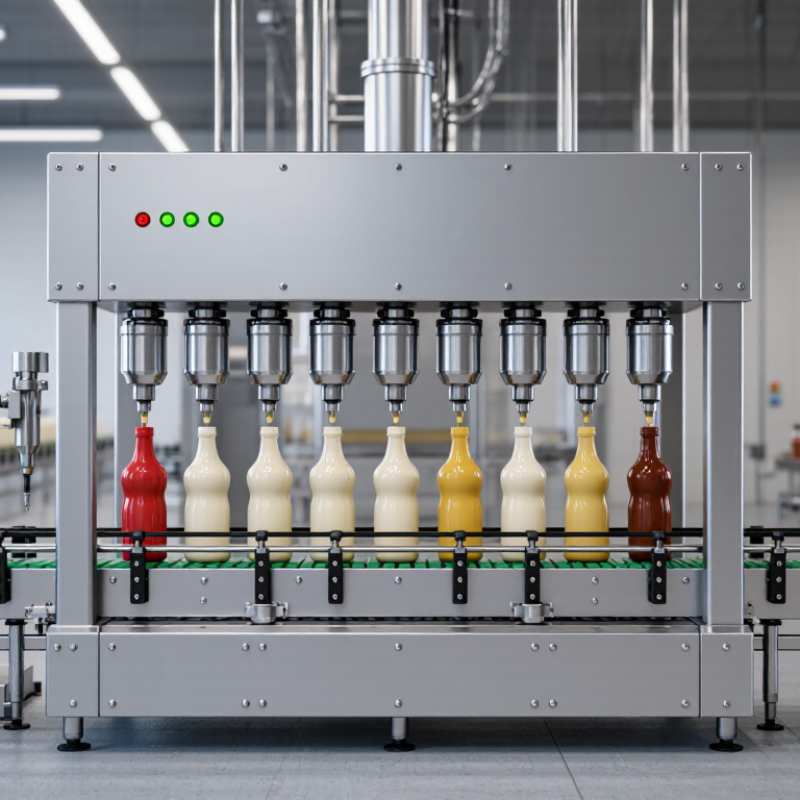
A Liquid Sauce Packing Machine fills, seals, and often caps products such as ketchup, mayonnaise, chili sauce, and salad dressing. It can measure each portion, control product flow, and reduce contact with the surrounding environment. Picture a stainless-steel nozzle filling twelve bottles in sequence, while sensors check their positions. The line may look simple. It is not.

According to PMMI’s 2023 State of the Industry report, U.S. packaging machinery shipments reached approximately $10.2 billion in 2022. PMMI also identifies automation, labor shortages, and flexible production as major industry pressures. Grand View Research reports continued growth in the global food packaging market, driven by convenience foods and stricter quality expectations. These figures explain why sauce producers increasingly examine automated filling equipment.

Packaging expert Jorge Izquierdo of PMMI has emphasized, “Automation is becoming a strategic necessity, not merely a productivity option.” His observation fits sauce production closely. Viscosity changes with temperature, recipe, and particle size. A machine calibrated for thin vinegar dressing may underfill a thick barbecue sauce. That small error can create waste, inconsistent flavor, or customer complaints.

This article explains how a Liquid Sauce Packing Machine works, from hopper loading and pump selection to filling accuracy, sealing, cleaning, and inspection. It also considers practical limits. Automation does not solve poor sanitation or weak process control. Operators still matter. A reliable machine requires suitable materials, repeatable recipes, hygienic design, and regular maintenance. The industry sometimes promises “hands-free” production. That phrase deserves careful reflection.
What Is a Liquid Sauce Packing Machine and How Does It Work?

What Is a Liquid Sauce Packing Machine?

A liquid sauce packing machine is industrial equipment designed to fill and seal sauces in containers. It handles products such as ketchup, chili sauce, dressings, and marinades. The machine measures a controlled volume, transfers it through a filling nozzle, and prepares each package for sealing. Packages may include pouches, bottles, cups, or sachets. Unlike dry-product fillers, sauce machines must manage thickness, flow, foam, and occasional particles. Clean product contact surfaces are essential. Poor hygiene can quickly affect product quality.

Most models use a hopper, pump, filling valve, conveyor, and sealing unit. The hopper holds the sauce before filling begins. A pump pushes the product toward each nozzle. The valve opens for a measured time or volume. Then, the sealing system closes the package using heat or another approved method. Sensors help control container position and reduce spills. In practical operation, temperature can change viscosity, so settings may need adjustment. No machine performs perfectly in every condition. Operators should verify fill weight, seal strength, and nozzle cleanliness during production.

Tips: Choose equipment according to sauce thickness and particle size. Test the product under actual production conditions. Check seals regularly, especially after changing film or container materials. Keep a simple cleaning record. It may reveal repeated problems before they become expensive. Calibration is also worth reviewing, even when the machine seems stable.

What Are the Main Components of the Machine?

What Is a Liquid Sauce Packing Machine and How Does It Work?

A liquid sauce packing machine combines product storage, dosing, filling, sealing, and control systems. Its central component is the hopper, which holds sauce before dosing. A level sensor helps maintain a stable supply. Without stable levels, fill accuracy may drift.

The pump determines how sauce moves. Piston pumps suit thicker sauces, while rotary or gear pumps handle smoother liquids. A servo motor can control stroke length and speed precisely. Filling nozzles then deliver measured portions into bottles, pouches, or cups. Anti-drip valves reduce strings and splashes around the container neck. This detail matters in real production. Small leaks can create hygiene problems and increase cleaning time.

A conveyor positions each container beneath the nozzles. Sensors confirm its location before filling starts. The sealing or capping unit closes the package, while a PLC coordinates timing, alarms, and recipe settings. Operators may also use temperature controls for warm sauces. According to Grand View Research, the global food packaging market was valued at approximately USD 356.5 billion in 2023, showing the scale of demand for dependable packaging equipment. PMMI industry reports also identify food and beverage as major users of packaging machinery.

Cleaning features deserve equal attention. Product-contact parts should be removable, smooth, and compatible with sanitation procedures. Many machines include CIP connections, but “automatic” does not mean maintenance-free. In practice, pump wear, sauce viscosity, and poor calibration can still reduce accuracy. Human inspection remains necessary.

What Is a Liquid Sauce Packing Machine and How Does It Work? - What Are the Main Components of the Machine?

Machine Area Main Component Primary Function How It Works Typical Design Considerations Commonly Used For
Product Preparation Mixing Tank Stores and blends the liquid sauce before filling. An agitator keeps ingredients suspended and helps maintain a consistent mixture. Tank volume, agitator speed, heating or cooling needs, and cleanability depend on the sauce formulation. Sauces containing particulates, emulsions, or ingredients that may settle.
Product Preparation Agitator Maintains product uniformity during holding and filling. A motor turns mixing blades or paddles at a controlled speed inside the tank. Blade shape and speed should match viscosity and shear sensitivity. Mayonnaise-style sauces, dressings, gravies, and sauces with suspended particles.
Product Transfer Transfer Pump Moves sauce from the supply tank to the filling system. The pump creates controlled flow through sanitary product piping. Pump type must suit viscosity, particle size, flow rate, and required cleaning method. Low- to high-viscosity liquid sauces.
Product Transfer Sanitary Piping and Valves Directs and isolates product flow between machine sections. Automated valves open and close according to the filling sequence. Smooth internal surfaces, suitable seals, drainability, and easy disassembly help support hygienic production. Food, beverage, cosmetic, and other liquid products requiring sanitary handling.
Filling Filling Nozzles Dispense a measured amount of sauce into each container. Nozzles open for a controlled time or volume and then stop the flow to reduce dripping. Nozzle diameter, shut-off design, spacing, and number of filling heads affect throughput and accuracy. Bottles, jars, pouches, cups, and other containers.
Filling Volumetric or Mass Metering System Controls the target fill quantity. Pistons, flow meters, load cells, or timed pump cycles determine the amount delivered. Selection depends on viscosity, foaming behavior, particulate content, and required accuracy. Thin liquids, viscous sauces, and products with small suspended particles.
Container Handling Conveyor or Container Indexing System Moves containers into the correct filling position. Sensors and guides align containers while the conveyor moves continuously or in timed steps. Container dimensions, line speed, stability, and changeover requirements must be considered. Rigid bottles, jars, tubs, and other pre-formed containers.
Sealing and Closing Capping or Sealing Unit Closes the filled container to protect the product. Caps are placed and tightened, or flexible packaging is heat-sealed according to the package format. Closure type, sealing temperature, pressure, dwell time, and container material affect seal quality. Screw-cap bottles, lug-cap jars, cups, sachets, and pouches.
Control System PLC and Human-Machine Interface Coordinates the filling sequence and allows operators to set parameters. The controller receives sensor signals and operates pumps, valves, conveyors, and filling heads. Recipe storage, alarm messages, access control, and adjustable timing improve repeatability. Automatic and semi-automatic packaging lines.
Inspection and Safety Sensors and Safety Interlocks Detects containers, verifies operating conditions, and helps protect personnel. Photoelectric sensors, level sensors, guards, and emergency-stop devices send signals to the control system. Sensor placement, response time, washdown protection, and guarding should match the production environment. Automatic detection of missing containers, low product levels, jams, and access-door openings.
Cleaning and Maintenance Drainage and Cleaning Connections Support product recovery, rinsing, and routine sanitation. Drain ports, removable parts, and cleaning connections allow product-contact areas to be flushed or disassembled. Accessible contact surfaces, compatible materials, hygienic welds, and minimal dead zones simplify cleaning. Food and other applications where sanitation and changeover time are important.
Basic Operating Sequence: The sauce is prepared in a mixing tank, transferred through sanitary piping, measured by the filling system, dispensed through the nozzles, and then sealed or capped. Sensors and the control system coordinate each step to maintain consistent filling and safe operation.

How Does the Sauce Filling Process Work?

A liquid sauce packing machine measures, fills, and seals sauces inside bottles, pouches, or jars. The process begins with a clean, temperature-controlled product tank. An agitator keeps spices, oils, and solids evenly distributed. This matters because sauce viscosity can change quickly during cooling. A filling pump then moves the sauce through sanitary pipes and nozzles.

The filling cycle is precise. Sensors detect each container, while a programmable controller adjusts volume and speed. Piston fillers suit thick sauces, such as chili paste. Flow meters work better with thinner sauces. The nozzle may rise during filling to reduce splashing and trapped air. Not every sauce behaves consistently, though. Particles can block narrow passages, and foam can distort the fill level. That is where practical testing becomes essential.

Operators usually check weight, temperature, seal quality, and nozzle cleanliness. They may also inspect a sample after several production cycles, not just at startup. The Codex Alimentarius General Principles of Food Hygiene recommends hygienic design and process controls throughout food production. The World Health Organization estimates that contaminated food causes about 600 million illnesses each year. That figure makes sanitation more than a maintenance task.

A 0.5-gram filling error can become expensive across thousands of containers. Still, maximum speed is not always the best target. A slower, stable fill may reduce waste, leakage, and rework. Analysis from PMMI on packaging automation also highlights the value of flexible equipment as product formats change. Sauce filling is mechanical, but judgment remains important.

Which Sealing and Packaging Methods Are Used?

A liquid sauce packing machine fills measured portions of ketchup, chili sauce, dressings, or marinades into bottles, pouches, cups, or sachets. A pump moves the sauce from a heated or ambient tank through a sanitary filling nozzle. The machine then controls volume, temperature, and drip reduction. This matters because a few grams of overfill can create daily product loss.

The main sealing method
depends on the package structure. Form-fill-seal equipment shapes film, fills the sauce, and closes the pack with heated jaws. Heat sealing works well with multilayer films, but sauce residue can weaken the seal. Ultrasonic sealing uses vibration and creates a narrow bond. It may perform better when small droplets reach the sealing area, though setup is less forgiving. Premade pouches use similar heat sealing after filling.

Bottled sauces usually receive screw caps, snap closures, or induction seals. Induction sealing bonds a foil liner to the bottle opening, helping prevent leakage and tampering during transport. Proper cap torque remains essential. Too little torque causes leaks; too much may damage the closure. According to Smithers’ The Future of Global Packaging to 2028, the global packaging market was valued at about 1.17 trillion US dollars in 2023 and is forecast to approach 1.38 trillion dollars by 2028. That growth supports more automated liquid packaging lines. Still, choosing the fastest method is not always wise. Sauce viscosity, acidity, particulates, film layers, and cleaning routines must be tested together. A perfect seal on clean film can fail in real production.

What Factors Affect Machine Selection and Performance?

What Is a Liquid Sauce Packing Machine and How Does It Work?

A liquid sauce packing machine measures, fills, and seals sauces in pouches, bottles, or cups. A pump moves sauce from a heated or ambient hopper into each container. Piston fillers suit thick products, while flowmeters work better with thinner sauces. Temperature, particle size, and viscosity directly affect dosing accuracy. The wrong pump can create splashing, dripping, or uneven portions.

Machine selection should begin with the sauce, not the package. Measure viscosity at actual filling temperature, then test particles, acidity, and foam behavior. Product-contact parts should support hygienic cleaning and suitable food-contact requirements. PMMI’s 2024 packaging machinery research identifies labor availability, changeover speed, and flexible production as major investment drivers. Those factors matter during real production, where a ten-minute adjustment can become an expensive daily delay. Often overlooked.

Performance also depends on filling speed, seal temperature, film structure, and operator training. A faster line is not automatically better. Seal failures may increase when temperature or pressure fluctuates. UNEP’s Food Waste Index Report 2024 estimated that 1.05 billion tonnes of food were wasted in 2022, representing 19% of food available to consumers. Accurate filling and reliable sealing can reduce avoidable product loss, although packaging cannot solve every waste problem. Trial runs should use real sauce, real containers, and extended operating time. Laboratory results alone can mislead.

FAQS

What is a liquid sauce packing machine?

It fills and seals sauces in bottles, pouches, cups, or sachets. It measures each portion. It also prepares packages for safe closure.

How does the machine work?

A hopper stores the sauce. A pump moves it toward the filling nozzles. Valves release measured portions into containers. A sealing unit then closes each package.

What are the main machine components?

Common parts include a hopper, pump, valves, nozzles, conveyor, sensors, and sealing unit. A control system coordinates timing and settings. Each part affects filling performance.

Which sauces can this equipment handle?

It can handle ketchup, dressings, chili sauces, marinades, and similar products. Thick sauces may need stronger pumping systems. Products with particles require suitable nozzles and valves.

Why does sauce temperature matter?

Temperature changes sauce viscosity. A warmer sauce may flow more easily. A thicker product may require slower filling or higher pumping force. Settings may need adjustment.

How can filling accuracy be maintained?

Check fill weight during production. Review calibration regularly. Stable hopper levels also help maintain consistent portions. Accuracy can still drift unexpectedly.

How should the machine be cleaned?

Clean product-contact parts after suitable production cycles. Use removable, smooth components where possible. Inspect nozzles for dried sauce and small particles. Automatic cleaning is not perfect.

What should operators inspect during production?

Operators should check fill weight, seal strength, container position, and nozzle cleanliness. Watch for splashes around the package opening. Small leaks can create larger hygiene problems. Simple records may reveal repeated faults.

How should equipment be selected?

Match the machine with sauce thickness, particle size, package type, and production speed. Test the actual sauce under real operating conditions. A machine may perform well in testing but differently in production.

Conclusion

A Liquid Sauce Packing Machine is an automated system designed to measure, fill, seal, and prepare liquid or semi-liquid sauces for distribution. It typically includes a product hopper, pumping or dosing unit, control system, filling nozzles, film-forming components, sealing jaws, and a conveyor or discharge mechanism. Together, these parts help maintain accurate portions, consistent packaging, and efficient production while reducing spills and product waste.

During operation, sauce is supplied to the hopper, where the dosing system delivers a controlled quantity into each container or preformed pouch. The package is then sealed using methods such as heat sealing, continuous band sealing, or cap sealing, depending on the packaging format and sauce characteristics. Machine selection and performance are influenced by viscosity, particle content, temperature, package size, filling accuracy, production speed, cleaning requirements, and available space. Proper adjustment and regular maintenance are essential for reliable operation, hygienic handling, and stable packaging quality.

Ethan

Ethan

Ethan is a dedicated marketing professional with a profound expertise in the company's product offerings. With a keen insight into market trends and customer needs, he plays a pivotal role in enhancing the visibility and accessibility of the company's innovative solutions. Ethan is responsible for......