
XinTu Machinery Co., Ltd. – Packaging Machine Industry Blog
Technical Articles & Knowledge

Packaging Machine Blog & Insights

Expert guides, maintenance advice & machinery innovations from XinTu Machinery Co., Ltd.
XinTu Machinery Co., Ltd. – Doypack & VFFS Packaging Guides
Industry Expertise

Automated Packaging Line Solutions

Learn how to optimize production efficiency with advanced VFFS and Doypack systems

0%

Choosing a Multihead Weigher Granule Packing Machine is not just a question of speed. It is a decision about target weight, product giveaway, changeover time, and how reliably granules flow through the line. A few grams lost in every pouch can add up across a long production run. Yet a machine that looks impressive on a brochure may struggle with dusty, sticky, or irregular product. Real trials matter.

Industry reports help frame the decision, but they do not replace testing. The International Federation of Robotics’ World Robotics 2024 report recorded 4,281,585 industrial robots operating worldwide in 2023, a 10% increase from 2022. That figure covers many industries, not weighing or packing machines alone. It does, however, show the broader shift toward automated production. PMMI’s 2024 State of the Industry: U.S. Packaging Machinery report offers further packaging-sector context for buyers comparing automation needs and equipment investment. Read both with care.

Quality-management expert W. Edwards Deming is widely credited with saying, “In God we trust; all others must bring data.” For this shortlist, that means asking suppliers for product-trial results, weighing accuracy, and service details—not relying on polished claims. Compare the machines against your actual granules, bag sizes, and output targets. Small details count. A missed cleaning step or awkward changeover can slow a line more than expected. No ranking can settle every trade-off; the best choice still depends on your product and factory conditions.
Top 10 Multihead Weigher Granule Packing Machines to Buy?

Understanding Multihead Weigher Granule Packing Machines

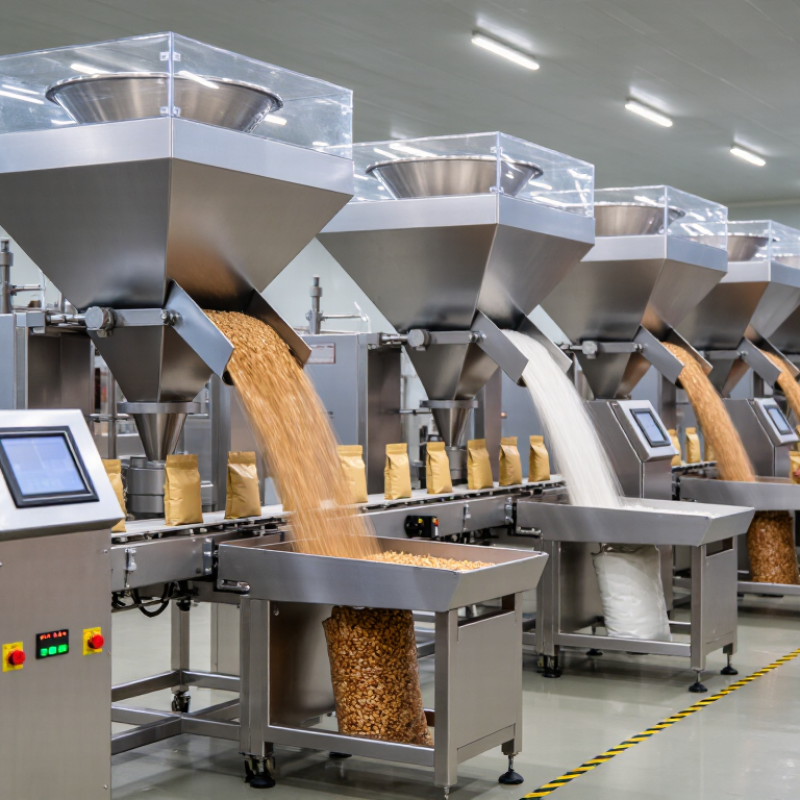
A multihead weigher granule packing machine portions free-flowing products by combining weights from several small hoppers. Granules move from a supply conveyor into a central distribution area, then vibratory feeders guide them toward individual weighing buckets. The controller selects a combination close to the target weight and releases it into the packaging unit.

Small details matter. A batch of dry rice may flow differently from coated seeds or irregular pellets, even when their average size looks similar. Product shape, dust, moisture, and hopper vibration can affect accuracy and speed. During a trial, watch whether granules bridge above the buckets or bounce onto sealing areas. These signs can reveal setup problems before routine production begins.

When comparing machines, match the number and size of weighing heads to your target portion and output rate. Ask for tests using your actual granules, not only sample material supplied for a demonstration. Check how operators adjust vibration, access weighing buckets, and clean product-contact surfaces. Calibration also deserves attention. It is easy to overlook. A technically capable machine may still struggle if the product feed is inconsistent; that part is sometimes harder to fix than expected. Keep records of trial weights and rejected packs, then review them after adjustments.

Top 10 Multihead Weigher Granule Packing Machines to Buy? — Understanding Multihead Weigher Granule Packing Machines

These representative target weights—from 100 g to 2 kg—illustrate common pack-size options for granules. They are example setpoints, not machine performance specifications; suitable weights depend on the product, packaging format, and applicable regulations.

How Granule Weighing and Packing Systems Operate

A granule weighing line begins at a hopper, where product flows onto several radial feeders. Each feeder distributes granules into a weigh bucket. Load cells measure the portions, and the controller selects a combination closest to the target weight. The chosen buckets discharge together into a forming tube or pre-made bag. Timing matters: a slow release can limit output, while an early release may leave a short fill. The machine then seals the package and sends it onward.

Small details change results. Dust, uneven granule sizes, moisture, and feeder vibration can all affect flow and measurement. Operators typically check target weights, clean contact surfaces, and test settings with the actual product before production. Real lines are less tidy than diagrams. A setting that works for dry pellets may not suit a fragile, irregular granule. The Global Packaging Machinery Market report by Grand View Research valued the market at USD 45.8 billion in 2023 and projected 5.8% compound annual growth through 2030. That broad market figure is not a performance measure for multihead weighers, but it reflects demand for automated packaging equipment. Calibration and routine weight checks remain essential; automation cannot compensate for poor product flow.

Key Specifications for Comparing Machine Models

When comparing multihead weigher granule packing machines, check the weighing range and stated accuracy against your actual product. Small, uniform pellets may flow differently from irregular granules. Ask for test results using a sample of your material, not only standard test weights. A fast number on a brochure is not enough.

Look at the number of weigh buckets, target weight, and packing speed under real operating conditions. More buckets can improve combination options, but they also add cleaning and maintenance work. Check whether bucket surfaces and product-contact parts suit your granules, especially if dust collects around hinges. Small details matter. Review the control interface, recipe storage, and changeover steps; an operator should be able to adjust a target weight without digging through confusing menus. Also compare installation footprint, power requirements, and the height of the discharge point against your existing line. Ask how accuracy is measured and what conditions affect it. I would not choose from speed alone. Published figures can be optimistic, and a test run may still miss the rhythm of a busy shift. Get service intervals and spare-part availability in writing, then compare the full operating picture.

Top 10 Multihead Weigher Granule Packing Machines to Consider

Choosing a multihead weigher granule packing machine starts with the product, not the headline speed. Ten configurations are worth comparing. A compact 10-head model may suit short runs and limited floor space. A 14-head machine can offer more combinations for steady production. A 16-head unit is worth assessing when target weights are tight. A 20-head system may support higher output, but only if the bagger keeps pace. For dusty granules, look for enclosed contact areas and accessible cleaning points.

Sticky products need shaped, polished contact surfaces and careful testing. Fragile pellets call for gentle handling and controlled drop heights. Small, free-flowing grains often benefit from narrow, stable feed channels. Larger granules need wider chutes to reduce bridging. A washdown-ready model may help where frequent wet cleaning is part of the process. Finally, consider an integrated weigher and vertical bagger when space and synchronized operation matter. Check sample runs with your actual granules; showroom tests can be misleading. Record giveaway, rejected packs, cleaning time, and changeover effort, not just cycles per minute. Ask about spare parts and calibration support. The best fit is not always the fastest. One trade-off is easy to miss: more weighing heads can raise purchase and maintenance costs without improving the full line’s output.

How to Match a Machine to Your Production Requirements

Choosing a multihead weigher starts with the product, not the advertised speed. Record target weight, pack format, required output, and the granules’ size, shape, and flow. Sticky pieces may bridge in a hopper; fragile pieces can break during feeding. Ask suppliers to run your actual product, then compare giveaway, weighing accuracy, and stable packs per minute. A fast trial with a different material proves little.

PMMI’s 2024 State of the Industry report estimated U.S. packaging machinery shipments at about $10.9 billion in 2023, reflecting a substantial, varied equipment market. That figure is market-wide, not a performance benchmark for weighers. For a fair comparison, request test conditions, reject rates, and results across several production runs. Check whether the machine fits your existing bagger, cleaning routine, floor space, and operators’ skill level. Small details matter. A narrow platform can complicate maintenance. I would also challenge any quote based on ideal flow alone; real granules vary, and a short factory test may not expose every issue.

Tips: Bring a representative batch and your smallest and largest pack sizes to the trial. Compare usable output, not just peak speed.

Top 10 Multihead Weigher Granule Packing Machines to Buy? – How to Match a Machine to Your Production Requirements

Configuration Typical Granule Products Weighing Heads Typical Pack Weight Indicative Output Common Packaging Format Best Suited To
Compact entry-level combination weigher Uniform, free-flowing granules such as sugar or salt 10 About 10–500 g About 20–50 packs/min Premade pouches or vertical form-fill-seal bags Small production lines, limited floor space, and moderate output requirements
General-purpose 10-head system Rice, seeds, pulses, and similar free-flowing products 10 About 50–1,000 g About 25–60 packs/min Vertical form-fill-seal bags Producers needing a flexible machine for several common pack sizes
High-speed 14-head system Uniform snacks, confectionery, and small dry granules 14 About 10–500 g About 40–100 packs/min Vertical form-fill-seal bags or premade pouches Higher output where the product flows consistently and does not readily stick
14-head system for medium and large packs Grains, beans, pellets, and larger free-flowing granules 14 About 200–2,000 g About 20–60 packs/min Large pillow bags or gusseted bags Medium-to-large retail packs and products that need a wider weighing range
20-head high-speed system Small, uniform products such as sugar-coated pieces or seeds 20 About 10–500 g About 60–120 packs/min High-speed vertical form-fill-seal bags High-volume lines with a compatible bagger and a steady product supply
20-head system for mixed or irregular products Mixed nuts, mixed snacks, or products with varied piece sizes 20 About 50–1,000 g About 30–80 packs/min Vertical bags or premade pouches Applications where more weighing combinations can help achieve the target portion
Water-resistant system for washdown areas Moisture-sensitive granules or products packed in frequently cleaned areas 10–14 About 20–1,000 g About 20–70 packs/min Vertical bags or premade pouches Facilities that require a suitable hygienic design and cleaning procedure
System with product-contact surfaces selected for the application Food, pharmaceutical, or other products with defined material requirements 10–20 About 10–1,000 g About 20–100 packs/min Format matched to the downstream packing machine Buyers who need to specify contact materials, cleanability, and documentation
Large-capacity combination weigher Large granules, pellets, or bulk portions 10–14 About 500–5,000 g About 10–40 packs/min Large bags, sacks, or containers Heavy packs where product handling and the bagging system set the line speed
Integrated multihead weighing and packing line Free-flowing granules matched to an automated feeding and bagging setup 14–20 About 20–2,000 g About 30–100 packs/min Vertical form-fill-seal bags or premade pouches Production lines seeking coordinated feeding, weighing, bag making, and discharge

Selection guide: The output figures are indicative planning ranges, not guaranteed machine ratings. Actual speed and weighing performance depend on product size, shape, flowability, target weight, feeding method, bag size, and the connected packaging equipment. Confirm the required range with product trials and check the complete line specification before purchase.

FAQS

What should I check before comparing machine models?

Match the weighing range and stated accuracy to your actual granules. Ask for test results using a sample of your product.

Does a higher weighing-head count always improve output?

No. More heads can offer more weight combinations, but they also increase cleaning and maintenance needs. Speed is not everything.

How can I assess a machine’s real packing speed?

Check performance under operating conditions, not just brochure figures. Confirm the bagger can keep pace with the weigher.

Which machine details matter for dusty granules?

Look for enclosed product-contact areas and accessible cleaning points. Dust around hinges can make routine cleaning harder.

What should I consider for fragile or sticky products?

Fragile pellets may need gentle handling and lower drop heights. Sticky granules need suitable contact surfaces and careful sample testing.

How do granule size and flow affect machine choice?

Small, free-flowing grains may suit narrow, stable channels. Larger granules need wider chutes to help prevent bridging.

What should I check before installing a machine on an existing line?

Compare its footprint, power requirements, and discharge height with your available space and equipment. I might be overthinking the footprint, but a few centimeters can matter.

What should a sample run measure besides cycles per minute?

Record giveaway, rejected packs, cleaning time, and changeover effort. Showroom tests can be misleading; I would still want to see a busy-shift trial.

How can I judge long-term operating needs?

Get service intervals, spare-part availability, and calibration support in writing. A fast machine may not be the best fit.

Conclusion

This article explains how a Multihead Weigher Granule Packing Machine combines precise portioning with efficient packaging for granular products. It outlines the basic operating process, from feeding granules into multiple weighing heads to calculating a target portion and releasing it into packaging. It also introduces the main specifications to compare when evaluating different models, including weighing range, accuracy, packing speed, hopper capacity, compatible packaging formats, and ease of cleaning and maintenance.

The article considers ten types of machines suited to a range of production needs, highlighting the importance of comparing capabilities rather than choosing by speed alone. To match a machine to a production line, readers should consider the product’s characteristics, required output, available floor space, packaging requirements, budget, and plans for future growth. These points provide a practical framework for narrowing options and selecting equipment that fits both current operations and longer-term production goals.

Logan

Logan

Logan is a seasoned marketing professional with a profound understanding of our company's products and services. With years of experience in the industry, he brings a wealth of knowledge and expertise to the table, making him an invaluable asset to our team. Logan is dedicated to staying ahead of......